
- Punjab needs 35,000 more middle, secondary school classrooms.
- Sindh has 36,000 primary schools, only 2,634 middle schools.
- Balochistan has 3,617 non-functional or ghost schools.
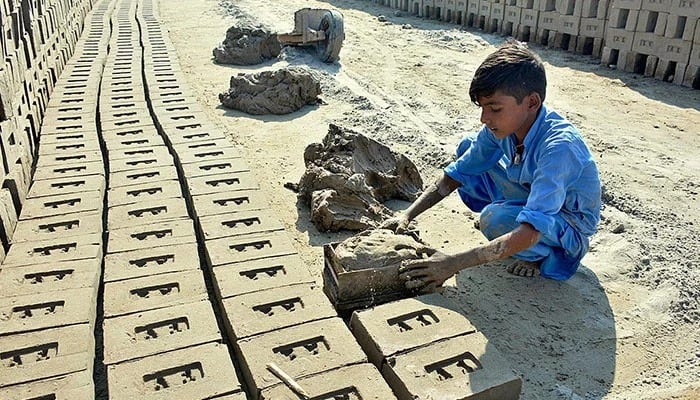
LAHORE: More than 25 million children in Pakistan remain out of school more than two years after the country declared a National Education Emergency, despite constitutional guarantees of free and compulsory education and repeated federal and provincial policy pledges, The News reported.
A comprehensive comparative policy review, prepared by the Civil Services Academy (CSA), concludes that Pakistan’s education crisis is no longer primarily about policy formulation but about execution, with weak governance structures, fragmented administrative systems, inadequate financing, poor data integration and deep provincial disparities continuing to obstruct progress under Article 25-A of the Constitution.
The report argues that while all the provinces have prepared detailed roadmaps under the National Education Action Plan (NEAP) 2026, the gap between planning and implementation has widened to the point where policy ambition has failed to translate into measurable educational access for millions of children. It warns that without structural reforms in governance, accountability and financing, the National Education Emergency risks remaining a symbolic declaration rather than a functional response to a national crisis.
Citing Pakistan Institute of Education (PIE) data, the report traces the crisis to decades of systemic neglect. It notes that rapid population growth, entrenched poverty, weak institutional capacity and persistently low public investment in education have compounded over time, steadily expanding the number of children excluded from formal schooling.
From the 1990s through the 2010s, responsibility for tracking out-of-school children remained with the Academy of Educational Planning and Management (AEPAM), yet millions of children continued to remain outside the system as state infrastructure failed to keep pace with demographic pressures, allowing low-cost private schooling to expand without addressing underlying access inequalities.
The CSA review, compiled by five Policy Analysis Groups at the Pakistan Administrative Service Campus, evaluates provincial education systems across Punjab, Sindh, Khyber-Pakhtunkhwa, Balochistan, Islamabad Capital Territory, Gilgit-Baltistan and Azad Jammu and Kashmir against indicators of effectiveness, equity, efficiency, ethical governance and feasibility.
It estimates that between 25.1 million and 26 million children of school-going age are currently out of school, making Pakistan the country with the second-largest out-of-school population globally, according to UNICEF assessments cited in the report.
The study notes that while the declaration of a National Education Emergency on May 8, 2024 brought unprecedented political attention to the issue, it did not resolve the fundamental mismatch between provincial realities and centralised policy responses. It argues that each province faces distinct structural constraints requiring tailored interventions rather than uniform solutions.
Punjab is identified as bearing the largest educational burden in absolute numbers, with between 9.6 million and 10.4 million children out of school. According to the Punjab School Education Department’s 2026 baseline report, 6.4 million children have never enrolled in school, while 3.16 million dropped out after initial enrolment, highlighting that retention is now as critical a challenge as access.
Despite advances in digital monitoring systems, governance reforms and public-private partnerships, inequalities remain stark, with rural Punjab recording a 24% out-of-school rate compared to 14% in urban areas. South Punjab emerges as the most deprived region, with Rajanpur reporting 48% out-of-school children, followed by Dera Ghazi Khan at 46% and Muzaffargarh at 45%.
The report estimates that the province requires around 35,000 additional classrooms at middle and secondary levels, while poverty, child labour and household economic pressures continue to push children out of education.
Sindh’s education crisis is described as structurally different, marked not by initial access failure but by a collapse in continuity beyond primary education. The province has around 7.4 million out-of-school children, including 4.1 million girls, representing 44% of its school-age population. Despite having over 36,000 primary schools, Sindh has only 2,634 middle schools and 1,674 secondary schools, creating a sharp institutional bottleneck that results in nearly 54% of children exiting education after completing primary school.
The report adds that floods in 2022 and 2024 damaged nearly half of public schools, compounding existing deficits, while poverty, child labour and entrenched feudal and patriarchal structures continue to disproportionately affect girls’ education.
KP accounts for approximately 4.9 million out-of-school children, or about 19% of the national total. The report attributes this to difficult terrain, security challenges, administrative fragmentation and acute shortages of female teachers, particularly in merged districts. In areas such as Upper Kohistan, Torghar and Bajaur, the absence of girls’ schools and women teachers remains a major barrier, with conservative social norms further limiting female enrolment where schools are staffed predominantly by male teachers.
Balochistan is described as the most structurally disadvantaged province, where despite a reported decline in out-of-school rates from 69% in 2023 to 45% in 2025, deep infrastructural gaps persist. The province’s vast geography means children often travel around 30 kilometres to reach primary schools and up to 360 kilometres for secondary education, making regular attendance largely unfeasible in many districts.
Of 15,270 schools, 3,617 are non-functional or ghost institutions. Even among operational schools, 79% lack electricity, 56% lack sanitation and 49% lack boundary walls, with girls comprising 78% of all out-of-school children in the province.
The report also challenges assumptions of relative educational stability in federal territories. In Islamabad Capital Territory, overall enrolment remains higher in urban areas at 85%, but falls to 62% in rural zones, with more than 60 informal settlements outside formal education planning frameworks.
In Gilgit-Baltistan, Diamer district records 42% out-of-school children, while in Azad Jammu and Kashmir nearly half of children drop out before completing primary education, with maternal illiteracy and remote geography identified as key factors.
Despite varying provincial contexts, the report highlights a common structural constraint: extremely low public investment in education. Sindh spends nearly 90% of its education budget on salaries and administrative costs, leaving minimal funds for development, while Balochistan allocates 81% of its education budget to salaries.
Punjab, in contrast, has announced a Rs100 billion package for school improvement, alongside expanded outsourcing and partnership-based schooling models.
Pakistan’s overall education expenditure remains significantly below international benchmarks, reinforcing concerns raised in the report that financial commitment has not kept pace with demographic realities or constitutional obligations.
The CSA review argues that Pakistan’s education crisis is now defined less by lack of diagnosis and more by repeated failure to act on well-known solutions. It recommends a structural overhaul of education governance, beginning with the creation of a unified National Student Registry linked to Nadra’s B-Form system to ensure real-time tracking of enrolment, attendance and dropout patterns across provinces.
According to the report, the absence of a reliable national database has allowed millions of children to remain invisible to the system, with provinces relying on outdated census figures or fragmented administrative records that fail to capture migration, informal settlements and dropout dynamics.
The report calls for the integration of formal and non-formal education data systems, noting that parallel structures have created duplication, inefficiency and gaps in continuity beyond primary education. It recommends legal recognition of accelerated learning pathways to allow out-of-school children to re-enter the formal system without bureaucratic barriers, alongside the institutionalisation of double-shift schooling in densely populated and high-demand districts to maximise existing infrastructure.
A major recommendation relates to human resources, particularly female teacher deployment in underserved regions. The CSA review suggests targeted financial incentives for women teachers posted in remote districts of Balochistan and KP, arguing that cultural constraints and security concerns can only be addressed through sustained staffing reforms.
It also proposes climate-resilient school infrastructure in flood- and disaster-prone areas, pointing to repeated disruptions in Sindh as evidence of systemic vulnerability to environmental shocks.
The report further recommends the establishment of autonomous district education authorities with financial and administrative powers to improve accountability and responsiveness at the local level. It argues that centralised decision-making has weakened service delivery and delayed responses to ground realities.
In addition, it calls for a shift from input-based budgeting to performance-based funding, where resource allocation is tied to enrolment outcomes, retention rates and learning indicators rather than administrative expenditure.
Within this broader governance critique, the report identifies the absence of coordinated national planning as a key structural failure. It notes that Punjab’s advanced track-and-trace system remains disconnected from non-formal education programmes, while KP continues to rely heavily on outdated demographic estimates.
Islamabad, despite higher enrolment ratios, lacks a real-time monitoring mechanism for children in informal settlements, leaving large segments of the urban poor outside formal oversight.
The CSA review warns that without addressing these systemic data and governance gaps, even increased spending will fail to produce measurable improvements, as resources will continue to be misallocated across overlapping and uncoordinated programmes.
Education expert Dr Abdul Hameed, Managing Director of the Centre for Inclusive Education and Research, describes the rising number of out-of-school children as the outcome of intersecting structural inequalities rather than a single policy failure.
He identifies poverty, distance from schools, gender discrimination, disability, lack of awareness about marginalised communities and negative social attitudes towards education as the primary drivers of exclusion.
He argues that non-formal education initiatives have often been designed on assumptions that do not reflect ground realities, particularly the needs of children with disabilities. According to him, many parallel education models rely on conventional teaching methods that fail to accommodate special needs students, effectively reinforcing exclusion rather than addressing it.
Citing UNESCO’s 2015 findings, Dr Hameed notes that nearly 30% of out-of-school children in Pakistan are estimated to have some form of disability, a figure that highlights the systemic inability of mainstream schools to absorb vulnerable populations. He contrasts this with earlier estimates from the 1998 census, which placed national disability prevalence at around 2.5%, suggesting a significant gap in identification and inclusion.
To address these challenges, he proposes a three-tier strategy. The first step is a comprehensive nationwide survey of out-of-school children to determine accurate numbers, categories and geographical distribution.
The second is the strengthening of inclusive education within primary schools to ensure that children with disabilities and other marginalised groups are integrated into mainstream classrooms rather than separated into parallel systems.
The third is the launch of a national School Readiness Programme under which university graduates would be required to identify and reintegrate at least five out-of-school children into the education system, supported through structured training and incentives.
Renowned education economist Dr Faisal Bari of the Lahore University of Management Sciences (LUMS) offers a more systemic critique, arguing that Pakistan has repeatedly declared education emergencies without implementing corresponding emergency measures.
He notes that similar announcements were made in 2010 and again in 2024, but in both cases the declarations were not followed by sustained policy action or increased financial commitment.
According to him, the fundamental problem lies in the absence of political prioritisation rather than lack of technical knowledge. He points out that education spending has continued to decline as a share of GDP, falling from around 1.7–1.8% in earlier years to below 1% in recent budgets, far short of the 4% benchmark recommended by the United Nations.
Dr Bari identifies three core structural constraints: insufficient school infrastructure, shortage of teachers and persistently poor learning outcomes across both public and low-fee private schools.
He notes that nearly six million children are born annually in Pakistan, but a significant proportion never enter school, while many who enroll eventually drop out due to poor quality education and lack of perceived economic benefit.
He highlights a stark progression failure, noting that out of every 100 children entering school, only around eight to ten reach university level. The rest either drop out at various stages or fail to transition due to weak learning foundations.
Dr Bari argues that improving access requires a dual strategy: either bringing children to schools or bringing schools closer to children. This, he says, demands expansion of school infrastructure, recruitment of additional teachers and significant investment in transport facilities to reduce physical barriers to access.
He also stresses the importance of nutrition and social protection in improving retention, noting that around 40% of children face malnutrition. School feeding programmes, alongside targeted financial support such as the Benazir Income Support Programme, could reduce economic pressure on families and discourage child labour.
Dr Bari further argues that education quality is a central factor driving dropout rates. With around 60% of children enrolled in public schools and most of the remainder in low-fee private institutions, he notes that only a small elite segment receives high-quality education. As a result, many parents lose confidence in the value of schooling when it fails to translate into skills, employment or mobility.
He cautions that Pakistan’s challenges are not unique in nature but in response. Countries facing similar demographic and economic constraints, he notes, have prioritised education and health spending, whereas Pakistan has consistently deprioritised both sectors.
A senior official of the Punjab School Education Department, speaking on condition of anonymity, confirms that the widely cited figure of 25.1 million out-of-school children is based on Pakistan Bureau of Statistics data released in 2023. The official acknowledges the scale of the challenge but points to a series of ongoing interventions aimed at improving enrolment and retention in the province.
These include the introduction of free school meals, outsourcing of underperforming schools through the Punjab Education Foundation, establishment of 100 technology-based learning centres and the expansion of public-private partnerships. The province has also launched Nawaz Sharif Schools of Eminence as part of efforts to improve learning outcomes in underperforming districts.
According to the official, Punjab Education Foundation partner schools alone have added approximately 800,000 students through expanded enrolment drives and school outsourcing initiatives.
The official maintains that while structural challenges remain significant, these interventions reflect a sustained effort to address both access and quality gaps in the education system.
The CSA report concludes that Pakistan’s education emergency now stands at a critical juncture. Without decisive reforms in governance, financing, data integration and institutional accountability, it warns the country risks entrenching rather than reversing its education crisis, leaving millions of children permanently outside the formal education system despite constitutional guarantees and repeated policy commitments.