
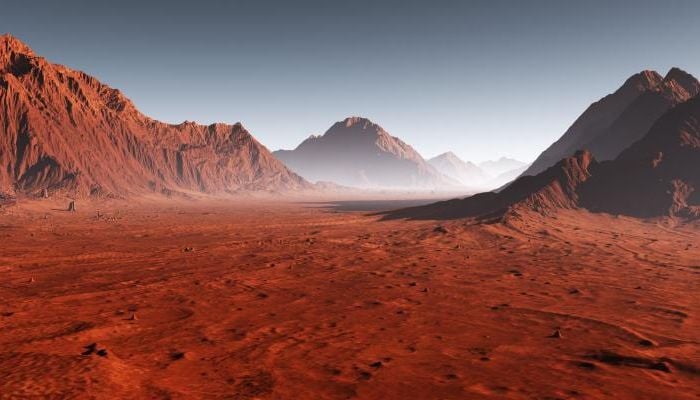
China plans to complete the world’s first AI-driven geological map covering the entire surface of Mars by the end of 2028, aiming for it to become the global standard for Martian geological ages.
The project will also produce a detailed 1:50,000 geological map of the Tianwen-3 landing zone and an atlas series, which could serve as a model for mapping the moon, Venus, and asteroids.
At the heart of this plan lies a sample-returning goal. Therefore China will launch the Tianwen-3 mission in late 2028, aiming to collect and return at least 500 grams of Martian samples to Earth by 2031, potentially making it the first country to achieve a Mars sample-return.
Speaking about the launch mission, the Tianwen-3 effort will involve two launches: one carrying a lander and ascent vehicle, and another carrying an orbiter and return module.
The map will incorporate data from China’s Zhurong rover, which found evidence that Mars may have had an intercontinental-scale ancient ocean around 3.5 billion years ago and short-term flooding approximately 1.6 billion years ago.
China’ s bold plan to map the red planet will intensify the space race with the US. NASA and the European Space Agency have initiated the Mars-sample return program but it faced soaring costs estimated up to $11 billion and delays pushing returns to no earlier than 2040.
In January, the US Congress cut funding to terminate the existing high-cost program, redirecting some funds toward lower-cost technologies under a new Mars Future Missions initiative, leaving US sample-return timelines uncertain.