
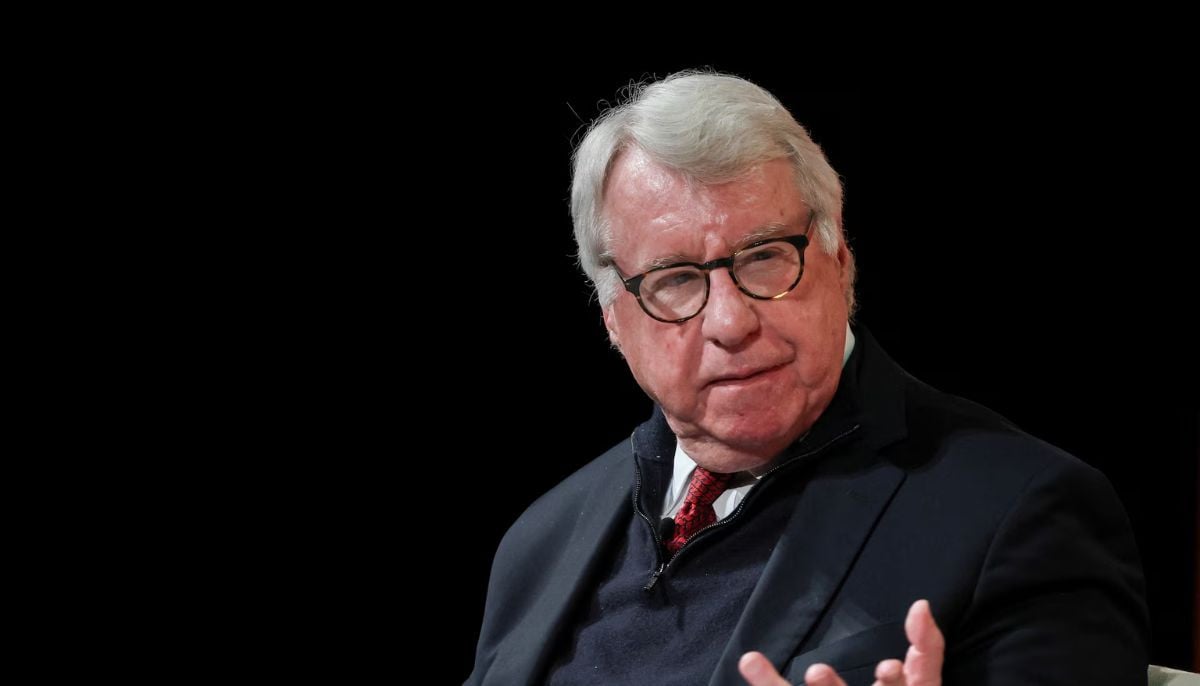
Jim Chanos made a crucial warning at the highly anticipated historic IPO of SpaceX, arguing that the space company’s astronomical valuation is driven by “hopes and dreams’ rather than solid evidence or financial reasoning.
On Friday, SpaceX is all set to go public in New York, seeking to raise $75 billion at a valuation of $1.75 trillion.
According to some analysts, businesses’ aggressive operational targets coupled with governance concerns are raising suspicious actions. Meanwhile, several short sellers are hesitant to take a major stance against the company, specifically after a recent rally in trillion-dollar technology stocks.
Chanos said at an iConnections conference in New York on Wednesday: “The company is not worth, in my opinion, $1.75 trillion based on any reasonable assumptions over the next five years.”
On paper, Tesla sellers have lost a significant $27 billion incorporating both directional bets against Tesla shares and shield used to account for Tesla’s inclusion in the S&P 500, according to details revealed by S3 Partners.
It has been observed that shares have soared to more than 2,500% over the last 10 years. While the activist short seller has called the economies of the data center sector, elaborating it as a “bad business” with low returns on capital.
“We really can build whatever stories we want — colonies on Mars, factory tunnels, data centers in space — to justify the valuation. In bull markets, you put a premium on promises and in bear markets, you put a discount on reality,” Chanos said.
Chanos further argues that conventional operators and scalable firms resemble REITs or equipment companies rather than rapidly expanding tech companies.
He further clarified that because these companies acquire advanced chips from suppliers such as Nvidia and sublet data center capacity to cloud giants; they face depreciation risks and limited pricing power.
Nonetheless, Chanos underlines that such businesses are overrated and should not command multiple orders higher than semiconductors makers than those of the semiconductors who mainly control hardware supply.
It is pertinent to mention that SpaceX seeks to expand its AI satellite factory in Texas and Bastrop to reach production volumes by the end of next year. The orbital tech project forms part of a master plan strategy to position SpaceX not only as a launch company but also acts as a prominent AI manufacture provider as it officially goes public.