
- Arif Habib doubts govt measures will trigger investment.
- Govt consulted stakeholders before tabling budget: Habib.
- Frequent policy changes hit business confidence: Ziad Bashir.
Business leaders on Sunday gave a mixed verdict on the federal budget for the fiscal year 2026-27, arguing that high energy costs, elevated tax rates and policy challenges continued to hinder investment in the country.
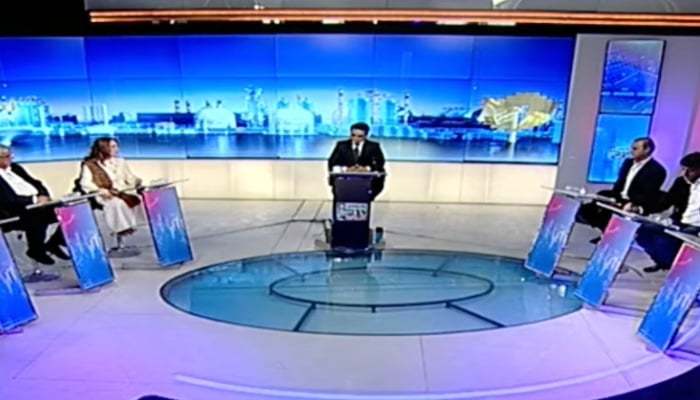
The development emerged during a special Geo News transmission on the country’s post-budget economic outlook, where economists and business leaders analysed the government’s key proposals and their likely impact on the economy and the lives of ordinary citizens.
Senior anchor Shahzeb Khanzada hosted the show, joined by business leaders Arif Habib, Muhammad Ali Tabba, Zeelaf Munir, and Ziad Bashir.
Speaking during the show, Habib expressed doubts that the government’s latest measures will be sufficient to trigger investment and create employment opportunities, citing high energy costs and tax rates.
“I do not think the government’s measures will lead to investment,” he said, adding that the country also needed lower tax rates to improve competitiveness.
According to Habib, the business community had consistently called for the abolition of the super tax and stressed that reducing energy costs was essential for boosting investment and exports.
He acknowledged that the government had consulted stakeholders before presenting the budget for the next fiscal year.
The business leader noted that the government had provided relief to salaried individuals and exporters while keeping the International Monetary Fund on board.
However, he questioned how quickly economic conditions could improve despite those efforts.
For his part, Ziad Bashir said that the government had done what it could under the circumstances and had helped stabilise the economy.
However, Bashir criticised the lack of focus on value addition and highlighted structural challenges facing industry.
He said railway freight accounted for less than 5% of cargo movement, arguing that excessive emphasis had been placed on road infrastructure while rail transport had been neglected.
He also pointed to shortcomings in shipping infrastructure, saying the country lacked direct port access for shipping needs.
“If we do not fix the fundamentals, how will we compete with the world?” Bashir asked.
He warned that frequent policy changes undermine business confidence, saying successive governments often reverse the policies of their predecessors.
Zeelaf Munir urged greater attention to creative measures, adding that development should proceed under a coherent long-term plan.
She stressed that while businesses were willing to invest, the private sector must be provided with a clear outlook for future growth.
Meanwhile, Muhammad Ali Tabba said that inflation posed a significant threat to lower-income segments of society.
He argued that policymakers must first understand underlying economic problems before implementing measures.
According to Tabba, weak investment in the country stemmed largely from policy-related issues, urging greater focus on boosting exports in sectors where the country has competitive potential.