
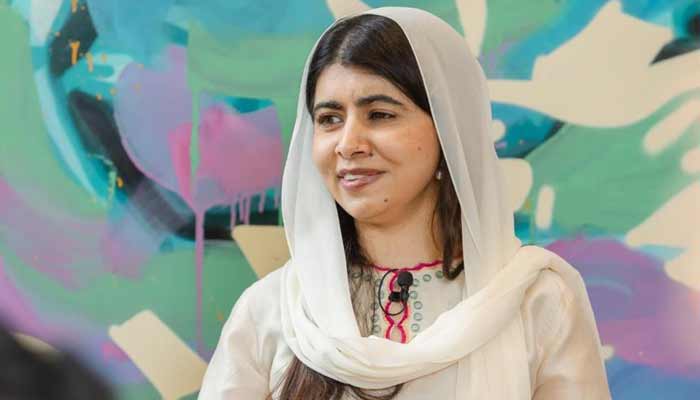
LONDON: Nobel Peace Prize winner Malala Yousufzai has said that she is highly optimistic about Pakistan’s bright future as the country’s educated youth is driven passionate about the development of their country through modern knowledge.
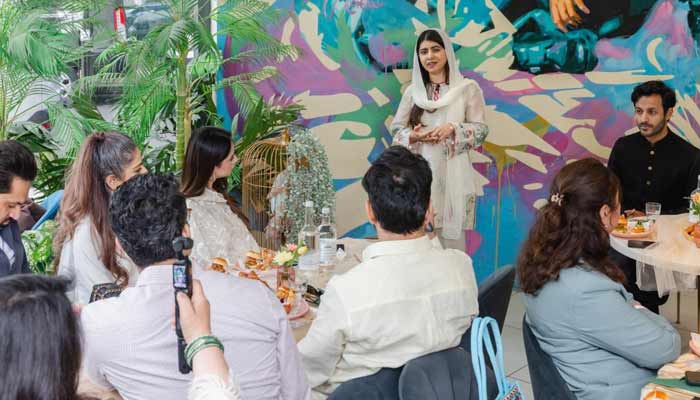
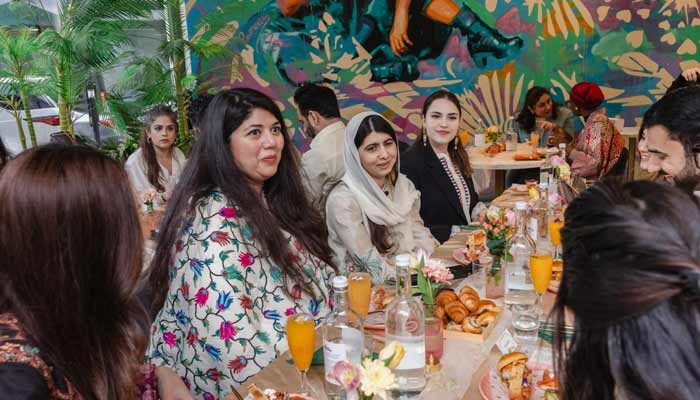
The Nobel Peace Prize winner was speaking to Geo News in Central London after a round-table with a group of influential Pakistanis to discuss the way forward for improving the standards of education in Pakistan. Malala assured that she will continue to do her best to empower her country of origin through education, with focus on the girls’ education.
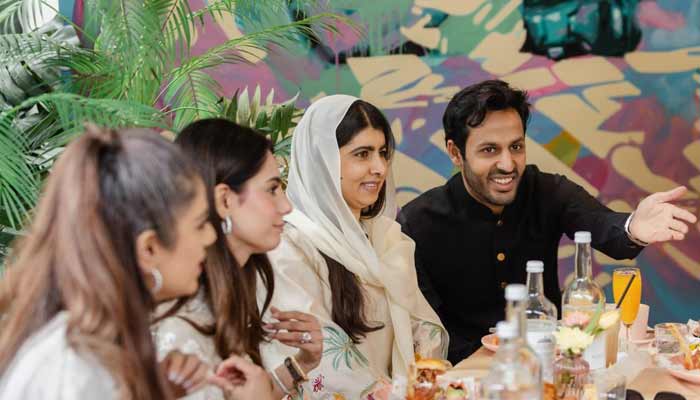
Malala Yousufzai took part in the lively quiz on Pakistan culture, mingled with the participants and shared stories. She told Geo News: “We all love Pakistan. All of us want progress and stability of Pakistan, based on education and latest technological knowledge to take Pakistan forward. The role of women in this journey is of utmost importance. It’s always heartening to see so many educated and young Pakistanis determined for the progress of Pakistan. A country with such passionate and dedicated segment always prospers.”
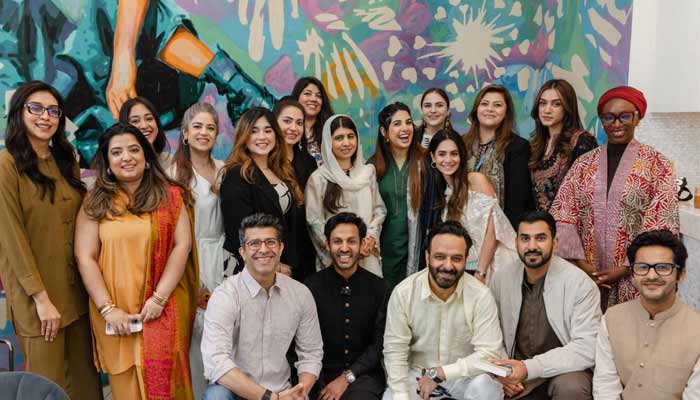
Hamza Chishti Director of Cloud and AI innovation at Microsoft from New York organised creators and influencers brunch in collaboration with Malala fund.
He said: “The idea was to put all top minds of the country together to talk about innovation, education and building better together for Pakistan. Being leaders of now and future, we want to empower every Pakistani to provide them access to education and hoping to shape the narrative of Pakistan as great as Pakistani people.”
Before the luncheon meeting with Pakistanis, Malala Yousufzai opened the landmark conference of UK government “Education world forum” in London, with Secretary of State for Education Bridget Phillipson. Education ministers from Punjab and KP, along with hundreds from all over the world, are attending the conference.
Malala discussed situation of girls educating in Palestine, Lebanon and Afghanistan at the conference.
She said: “When I spoke to Palestinian girls from this school earlier this month, their biggest concern was their upcoming exams. How can they continue their education if they can’t even reach their classroom? Girls understand the problems — but they also have solutions. In Nigeria, where one in three girls is married before her 18th birthday, girls told me that we needed to fight early marriage. But, at the same time, they wanted government policies that allowed married and pregnant girls to go back to the classroom — a pathway to continue their education without stigma or shame.
In Palestine, seven-year-old girls organise protests for their right to education. Nowhere is their determination more courageous and vital than in Afghanistan, where girls are banned from school past sixth grade under the Taliban’s brutal regime of gender apartheid. Across the country today, they are listening to lessons on the radio, discretely passing cassette tapes and books to each other and trying to keep studying in secret.”
Malala told the conference: “My mother grew up in a village in Pakistan that had never had a secondary school for girls. When I decided to build one, people were quick to tell me why it couldn’t be done. They said construction was impossible in such a remote area. That qualified teachers wouldn’t want to work there. That local social norms meant fathers wouldn’t allow their daughters to attend school even if there was one. I didn’t let that stop me — and today the Shangla Girls School has 1,050 students. The high school girls have scored some of the top marks in the province on their standardised exams.”
Those in attendance at the luncheon meeting with Malala included Sana Rahman, Maham Ali, Zeba Qureshi, Ramsha Ali, Shanzay Shiekh, Saba Azam, Zara Lashari, Harris Saeed, Abdullah Abubaker, Momin Saqib, Zahra Khan, Kashaf Ali, Pashma Abbas, Mohsin Naveed Ranjha, Mahnoor Omar, Emilie Yam, Nishat Riaz — Chief Executive Malala Fund Pakistan, Hiba Siddiqui, and Muhammad Ali.