
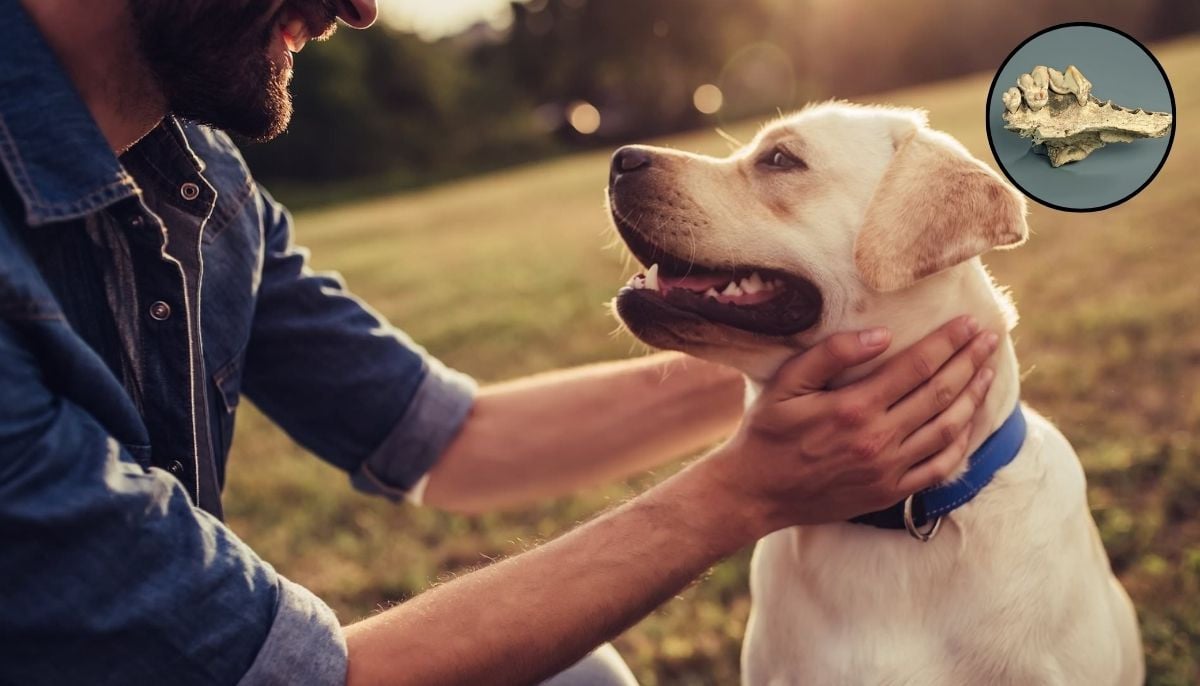
Humans and dogs have shared a loyal bond since the dawn of domestication, yet the specific “when, where, and why” of their evolution from grey wolves has long been a mystery.
However, new genetic research is providing ground-breaking clarity, specifically by identifying the oldest dog ever recorded.
According to researchers, this canine lived approximately 15,800 years ago and their remains were discovered at the Pinarbasi rock shelter in Turkey, a site once frequented by ancient hunter-gatherers.
This discovery is significant because it pushes the timeline of genetically confirmed domestication back by roughly 5,000 years compared to previous finds.
The researchers in a new study published in the journal Nature, also identified that the Pinarbasi dogs and several others were an integral part of human culture even before the advent of agriculture.
According to William Marsh, a postdoctoral researcher in the Ancient Genomics Laboratory at the Francis Crick Institute in London, and co-author, the recent genetic evidence showed that dogs were not only genetically different from wolves but also present in western Eurasia by 18,000 years ago.
“We putatively predict that dog and wolf populations diverged a lot earlier, likely before the last glacial maximum (of the Ice Age), so before 24,000 years ago. Although saying that, there is still a great degree of uncertainty,” Marsh said.
Ever-present companionship
The study also found the dogs were also exchanged by various human groups, showing their significance in early human communities.
“Dogs have been by our side as humans underwent major lifestyle transitions and complex societies emerged,” said geneticist Anders Bergström of the University of East Anglia in England, lead author of the other study.
According to Bergström, undoubtedly dogs have remained important for human communities. But it does not mean they always have very clearly defined roles or purposes for humans.
“Perhaps their primary role is often just to provide companionship,” Bergström added.
Besides companionship, the ancient dogs were also helpful for early humans, helping them to hunt. They also served as watchdogs, such as Ice Age alarm systems, as reported by the researchers.
Bergström and his team carried out the research with an aim to identify early dogs of Europe by using a new technique to differentiate between wolves and dogs.
They collected 216 ancient remains ranging from 46,000 to 2,000 years old from the Netherlands, Scotland, Sweden, Switzerland, Belgium, Denmark, France, Germany, and Turkey. This was the largest study of such remains to date. Consequently, the team identified 46 dogs and 95 wolves.