
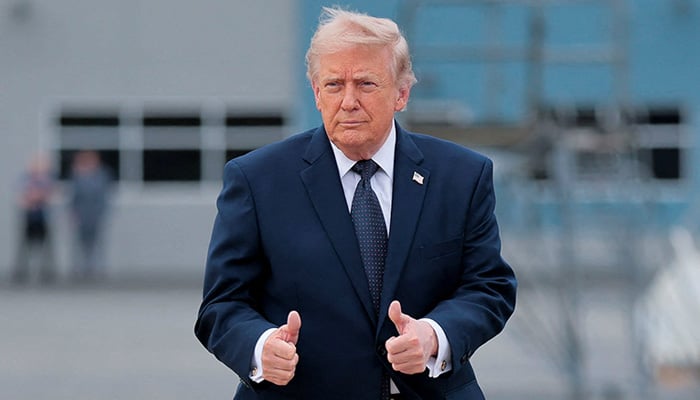
- Trump says Strait of Hormuz reopening under emerging deal.
- Pakistan reports encouraging progress in Iran-US negotiations.
- Agreement to allow Iran to manage Strait of Hormuz: report.
US President Donald Trump wrote on Saturday that a memorandum of understanding on a peace deal with Iran is “largely negotiated,” as both countries and mediators in Pakistan reported progress.
Trump posted on social media that the emerging agreement would reopen the Strait of Hormuz, the vital shipping passage whose closure upended global energy markets after the conflict started in February when the US and Israel launched strikes on Iran.
Trump did not say what else would be included in an agreement. “Final aspects and details of the Deal are currently being discussed, and will be announced shortly,” Trump said.
Iran’s Fars news agency reported early on Sunday that the agreement would allow Iran to manage the Strait of Hormuz. It said Trump’s assertion that an agreement was nearly final was “inconsistent with reality.”
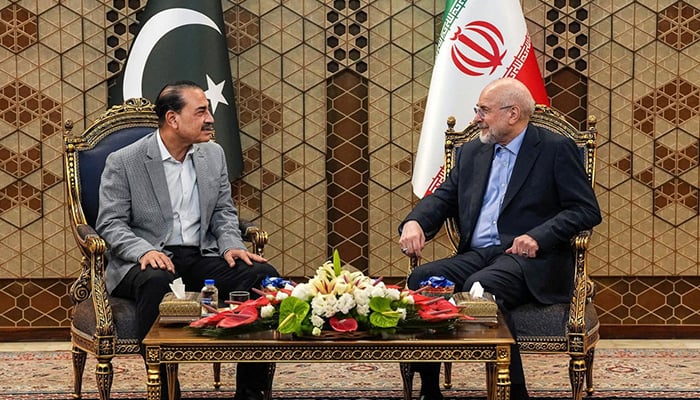
Iran had said earlier on Saturday that it was working toward a memorandum of understanding laying out an approach to ending the war after its top officials met with Pakistan’s Chief of Defence Forces (CDF) and Chief of Army Staff (COAS) Field Marshal Asim Munir.
The Inter-Services Public Relations (ISPR) said that the negotiations had resulted in “encouraging” progress towards a final understanding. Two Pakistani sources involved in negotiations said the deal being negotiated is “fairly comprehensive to terminate the war.”
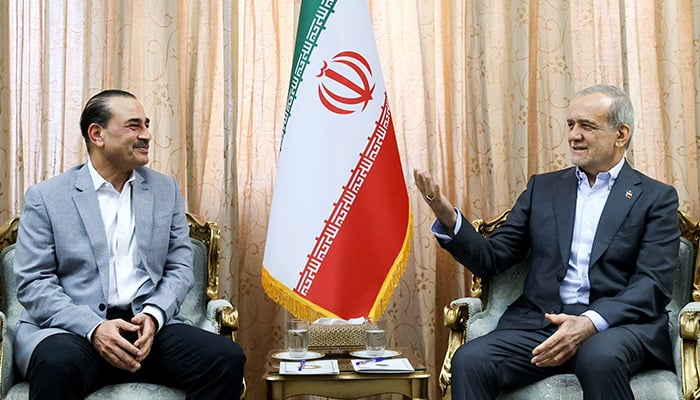
Sources have told Reuters the proposed framework would unfold in three stages: formally ending the war, resolving the crisis in the Strait of Hormuz and launching a 30-day window for negotiations on a broader agreement, which can be extended.
Earlier on Saturday, Trump told Axios that he expected to decide on Sunday whether to resume attacks on Iran. “Either we reach a good deal or I’ll blow them to a thousand hells,” Axios quoted him as saying.
One of the Pakistani sources said there was no guarantee the US would accept the memorandum; if it does, it would lead to further talks after the Eid holiday ends on Friday.
Trump to speak with Middle East leaders
Trump, whose approval ratings have been hit by the war’s impact on energy prices for US consumers, said on Friday he would not attend his son’s wedding this weekend, citing Iran among the reasons he planned to stay in Washington.
Trump wrote on his Truth Social platform that he had a phone call on Saturday with leaders from Saudi Arabia, Qatar, the United Arab Emirates, Jordan, Egypt, Turkey and Pakistan. Axios reported that the leaders encouraged Trump to agree to the emerging framework.
Pakistan has aimed to narrow differences between Iran and the US after weeks of war have left the vital Hormuz waterway closed to most shipping despite a nervous ceasefire.
US Secretary of State Marco Rubio earlier on Saturday reiterated Trump’s terms for ending the fighting. “Iran can never have a nuclear weapon. The straits need to be open without tolls. They need to turn over their enriched uranium.”
Rubio, who is visiting India, said some progress had been made and work was continuing.
“Even as I speak to you now, there’s some work being done. There is a chance that, whether it’s later today, tomorrow, in a couple days, we may have something to say,” Rubio told reporters in New Delhi.
US Vice President JD Vance returned to the White House on Saturday afternoon, cutting short a trip to Ohio.
Iran denies it is pursuing nuclear weapons and says it has a right to enrich uranium for civilian purposes. It has demanded supervision of the strait, an end to the US blockade on its ports and the lifting of sanctions on Iranian oil sales.
“The trend this week has been towards a reduction in disputes, but there are still issues that need to be discussed through mediators. We will have to wait and see where the situation ends in the next three or four days,” said Iranian Foreign Ministry spokesperson Esmail Baghaei.
Baghaei said the issue of the US blockade on Iran’s shipping was important, but that its priority was ending the threat of new US attacks and the ongoing conflict in Lebanon, where Iran-allied Hezbollah is fighting Israeli troops who have moved into the south.
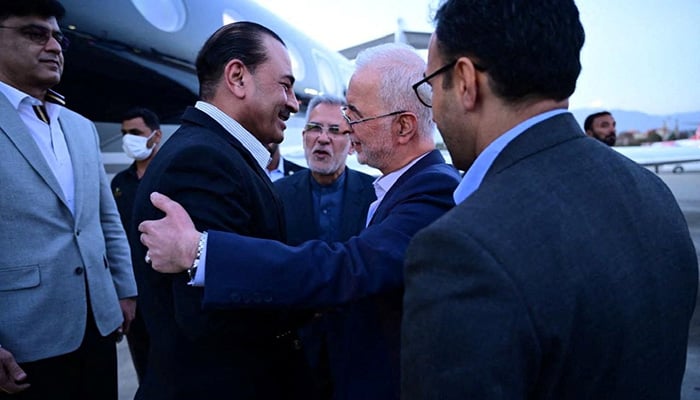
CDF Munir left Tehran on Saturday after talks with Iran’s top negotiator Mohammad Baqer Qalibaf and Foreign Minister Abbas Araqchi.
Qalibaf said Iran would pursue its “legitimate rights,” both on the battlefield and through diplomacy, but added that it could not trust “a party that has no honesty at all,” an allegation Iran has made several times before.
He said Iran’s armed forces had rebuilt their capabilities during the ceasefire and that, if the US “foolishly restarts the war,” the consequences would be “more forceful and bitter” than at the start of the conflict.
Despite weeks of conflict, Iran has preserved its stockpile of near-weapons-grade enriched uranium as well as missile, drone and proxy capabilities.